

Cultural resource management archaeologists in the United States have been asking professors in academia to adequately train professional archaeologists for over 60 years. And for over 60 years, academia has not listened. Universities continue focusing on theory despite the reality that about 90 percent of archeologists work in CRM or for government agencies, and the funding for CRM archaeology vastly outstrips funding for academic archaeology.
Last month, I partially addressed this question in the post “Archaeology students just want jobs.” I also covered it on the CRM Archaeology Podcast Episode 332. In short, the CRM archaeology industry could replace universities, but I don’t think it will. Since the late 1950s CRMers have been complaining about how poorly we professors are training students but the industry hasn’t done anything about it. Unprepared recent grads are a drag on company profits and an inefficient use of tax dollars, but CRM basically accepts the reality that university professors are extremely unlikely to adequately prepare students for the workforce. Even though all the money is in CRM, the industry still depends on universities to do the basic training because CRM needs archaeologists with college degrees, universities are the only place you can get an accredited degree, and, no matter how much they complain, CRM companies can pass on the costs of training new hires to their clients.
For better or worse, the money and jobs are in archaeology not academia. Nevertheless, universities keep teaching things that will not serve graduates in the CRM industry even though that’s where their graduates are going to work if they plan on becoming archaeologists after graduation. Additionally, governments are cutting funding for universities while funding for CRM is staying stable (as of August, 2026), although this could change if the proposed changes to Section 106 of the National Historic Preservation Act (NHPA) are made permanent. Academic archaeology is starving and could really benefit from public-private partnerships. Yet, academia has not gotten the message, and I don’t think it is capable of listening.
Despite the potential for collaborations and the role college degrees play in archaeology certifications, CRM is unlikely to build the kind of mutually beneficial connections with universities that would provide incentives to better prepare graduates for careers in archaeology. Also, I believe CRM is unlikely to invest in anthropology departments, which would provide a financial motivator for anthropology departments.
The reason why CRM will not train tomorrow’s archaeologists is because the industry can still exist without reform. The same goes for academia. Currently, universities do not have a financial motivation to train CRM archaeologists. Basically, neither academia nor CRM needs to change even though both entities would be enriched by doing so.
However, things do not have to stay the way they have for the past 80 years. Both CRM and academia can change. And I think right now is an excellent time to make that change.
Archaeology, CRM, and Academia in the United States
[AUTHOR’S NOTE: This blog post comes from my decade of experience as an archaeology professor at an R1 state university, seven years of experience as a graduate student, and 20 years doing CRM archaeology. This post is a highly subjective commentary and my own personal opinion. I know there are other archaeology professors that are taking action to prepare their students for CRM careers. We are not in the majority. Also, these are my statements alone and do not reflect the sentiments of my employers.]
Archaeologists have been working under government mandates as early as when Ephraim G. Squier and Edwin H. Davis conducted the Moundbuilder surveys in the 1845–1847, but the true need for archaeologists specializing in CRM didn’t begin until the 1930s. Civilian Conservation Corps (CCC) excavations and explorations under the Historic Sites Act of 1935 led to the creation of the contract archaeology professor, because, at the time, professors were the only ones qualified to do scientific archaeology digs under the Antiquities Act of 1906. The 1930s launched a new breed of archaeology professor—one that was learning the parameters of contract archaeology but was also doing service and teaching in universities.
Depression-era digs gave way to River Basin Surveys of the 1940s–1960s when archaeologists scrambled to conduct data recovery excavations at hundreds of sites across 13 states: California, Georgia, Kansas, Nebraska, New Mexico, North Carolina, North Dakota, Oregon, South Dakota, Texas, Virginia, Washington, and Wyoming (https://core.tdar.org/collection/15527/river-basin-surveys-papers-1-39). These projects were conducted in advance of infrastructure construction, most prominently dam construction on the Missouri River, and generated the need for archaeologists that could work quickly within project areas, within budget, and could record and analyze archaeology associated with any culture that ever existed in that location. Then as is the case now, archaeology professors tended to have a particular specialty and that was what they taught because that was what they knew. Early CRM professors landed these contracts because of their regional expertise and position in universities, but the successful ones learned how to get things done quickly. Academic archaeologists not in CRM had the luxury of time. Their research could be strung out throughout an entire career. This gave them time to focus on the nitty gritty and wax poetically about migration theories and archaeological culture boundaries but this prevented them from developing the adaptability and flexibility necessary to do CRM. Conversely, CRM professors had to get things done quicky and efficiently since the sites they were working on were about the be destroyed. They also needed to be adaptable since they would soon be moving on to the next project, which could be in a completely different culture area.
Because early CRMers were adapting to the faster paced nature of CRM work and because they were still working in universities, whose bureaucracies consume massive amounts of time, many projects were never adequately finished. Artifacts were never properly cataloged. Sites were never completely reported. The data was never entirely analyzed. Early CRM earned a reputation for being sloppy. Indeed, this is true since, as of 2026, a huge amount of the CCC and River Basin-era collections have still not been properly analyzed. Nevertheless, this concentration of funding and efforts created the earliest group of true CRM archaeologists.
Construction in the United States maintained a frenetic pace and by the 1960s sites were being lost at a rapid rate, even more quickly than in the 1930s. CRM needed more skilled recruits to replace those retiring CCC-era CRMers. Beginning in the 1960s, CRM archaeologists started asking academia for help training the next generation. Articles in American Antiquity and other publications called upon archaeology professors to train a cohort of CRM archaeologists—folks with solid field skills who were able-bodied and familiar with life in the field. CRMers asked universities for help because, as is still the case, universities were the only places where students could learn archaeology.
Rather than realizing this was academia’s chance to build a commanding space in archaeology—as the source of method, theory, and professional training, a place where academicians could guide archaeology in this country and decide how it became professionalized— universities did next to nothing. The vast majority of archaeology professors heard these calls and thumbed their noses at CRM. They didn’t listen to the “sloppy, unrefined” CRMers. The general consensus was universities are not in the business of doing workforce training. Academia thought it was teaching tomorrow’s scholars, illuminating the citizenry, and thinking big thoughts. Universities were supposed to be where theories came from so they could be “ground truthed” by all those lesser CRM archaeologists. I don’t think every archaeology professor felt that way, but I can attest that many still do think about CRM that way. I see it at work every day.
Meanwhile, the United States kept pouring more money into CRM. The National Historic Preservation Act (NHPA) was passed in 1966, and the National Environmental Policy Act (NHPA) was passed in 1969. States and local municipalities also passed historic preservation laws, which created a larger nexus for CRM archaeologists. And the United States kept building stuff that had to comply with these laws.
More compliance= More projects= More archaeological data= More archaeology jobs.
The ranks of CRM archaeologists continued to grow until there were an estimated 11,000—17,000 professional CRMers working in government agencies and CRM companies across the country by the 2020s. But most incoming, early-career university graduates were still ill-prepared for careers in CRM archaeology. CRMers kept asking universities to do a better job of preparing students for CRM careers. Most universities kept theorizing about doing archaeology and kept failing to respond to industry needs.
Meanwhile, the United States kept pouring money into CRM while defunding academia. Altschul and Klein (2022) estimate the United States will be spending $1.85 billion on CRM by 2031. Meanwhile, funding for academic archaeology has not increased at the same rate. For example, the National Science Foundation (NSF) has been a significant funding source for academic archaeology. In 2020, the NSF awarded approximately $3.5 million for academic archaeology which compares with the approximately $1.4 billion the entire country paid for CRM that year (Altschul and Kintigh 2025). Additionally, federal funding for academic archaeology is even more threatened by the current administration; whereas the laws behind CRM have not been rescinded which means, for now, CRM still exists. Additionally, public funding for universities as a percentage of their operating budgets has been decreasing for over 20 years while university expenses have kept ballooning which has led to some creative funding solutions. All of this means tough times for academic archaeology across the country while CRM should remain an essential industry.
When it comes to pay and job creation, academia lags behind CRM. There was an increase in archaeology professors over the past 60 years, but these positions did not increase as rapidly in number as CRM archaeology positions. And pay for professional archaeologists (e.g. those that meet the Secretary of Interior’s Standards for Archaeology) has outpaced the salaries of archaeology professors. Today, a CRM principal investigator with an MA and experience will enjoy a higher annual salary than most tenure track university professors with a PhD ever will. Academia has also been graduating more PhDs than academia can absorb; 70 percent of professors are not tenure track. Wages for these instructors in academia are even lower than those of tenure track professors and their employment security is even lower, but university professors continually assert that their PhD students have a future in academia because that’s all they know.
The reality is: “Today, about 90% of all US archaeologists work in CRM, and about 93% of all the money spent on archaeology is CRM related.” (Altschul and Kintigh 2025:10). CRM is American archaeology.
In summary, CRM archaeology came to define American archaeology because CRMers were doing over 90% of the work, commanded over 90% of all money spent on archaeology, and employed over 90% of all the archaeologists. Academic archaeologists kept writing books and articles on their few projects while CRMers were grinding multi-volume, impactful reports about gigantic archaeological sites interspersed between reports on smaller projects of every kind. Every CRMer with a Masters writes more in a year than a tenure track professor writes in a decade. Despite doing less archaeology, which should have given them more time to align curriculum with what skills are required in the workplace, academic archaeologists kept looking at their belly buttons. They did not create a system that will adequately train their students for careers in CRM. The clarion call for qualified early career CRM archaeologists has remained loud and clear.
But, after 60+ years of waiting for universities to listen, CRMers are asking a new question: Does CRM archaeology need academia anymore? Can the industry just do the training themselves?
What is academic archaeology doing?
Academic archaeology is doing a lot of things but preparing students for careers in CRM is currently not one of those things. Here is what CRM is asking professors to teach archaeology students:
- Regulatory contexts and historic preservation laws
- Technical writing (including AI-assisted writing)
- GIS
- Data collection, curation, and analytics
- Logistics
- Occupational health and safety
- Proposal writing and budgeting
- Networking and marketing
- Negotiations
- Collaboration and consultation with Native American tribes and Traditionally Associated Peoples (TAPs)
- Ethically integrating Artificial Intelligence (AI) into workflows
Here’s what archaeology professors have focused on:
- Our own research
- Theory
- Committees
- Hiding from AI
Academic archaeology is excellent at pursuing ideas. Academia forces professors to write articles on our research so, despite paywalls, academia is also pretty good at sharing at least some of the fruits of our labor with others. Academia is also great at generating enough prestige to keep it relevant. Even though professors and academic researchers are not doing most of the archaeology in the United States, the higher ed industrial complex is excellent at convincing the wider world that the only thoughts worth thinking are coming out of universities. Most importantly: Academia is amazing at convincing the citizenry that it needs the degrees we produce. College degrees are equated to intelligence and employability. Those with degrees are the ones that deserve quality jobs; those without degrees deserve whatever society allows them. Americans today, however, are questioning the value of these degrees, especially since they cost tens of thousands of dollars and do not teach skills that can be used in the workplace.
Most archaeology students will not learn the things they need to succeed in CRM by going to college. Most will hardly even hear CRM mentioned in archaeology classes. They will spend more hours pondering the differences between processual and postprocessual archaeology (movements that happened almost 50 years ago) than they will thinking about what it’s like to plan, lead, and manage a team in the field or lab. They won’t learn about budgeting, writing a proposal, or negotiating with clients or for a higher salary. They are unlikely to learn how to fill out a site record, build the parts of a CRM report, or what “deliverables” are expected in CRM archaeology. Professors do not teach students CRM things because they don’t know how to do them either. In fact, universities are reluctant to even hire professors that could teach CRM skills.
I can tell you from first-hand experience that we are living through a time when higher academic archaeology is struggling. This is partly because higher ed is only working to recreate higher ed as it existed in 2007— the period right before the Great Recession; Higher Ed’s zenith. While everything changed following the Great Recession and the Pandemic, higher education never forgotten what it was like during the Golden Age of the aughts. In addition to nostalgia, academia can’t change because of the way it is structured and operates. Universities have an unsatiable thirst for money, which makes them run towards the nearest faucet willing to shower it with cash. Unfortunately, the government is turning off their money faucet, so universities have to go elsewhere to slake their thirst. Today, universities are just like other for-profit corporations and behave exactly the same. Profits are the practically the only thing that matters to university administrators and they will stop at nothing to achieve them.
In this pay-to-play world, CRM companies must donate to universities in order to be seen. And, currently, CRM isn’t making donations, so nobody is paying attention to its needs.
But the university system itself is only part of the problem. Another problem is the people making the product—professors. Today’s professors are older than ever before. I’m not saying an old professor can’t be capable and relevant, but I am saying old professors live life based on what they know and what we know is oftentimes outdated. I was the second youngest person in my department from 2017 and 2019, and I was in my late thirties. During that time, I only had one other colleague that was also in their 30s (now we’re both in our forties) and we’ve hired two more folks that are in their thirties. My department hasn’t hired anyone in their twenties in the decade I’ve been here even though we’ve hired over a half dozen tenure track professors.
Also, old professors are reluctant to hire anyone that would challenge their hegemony—like a CRM principal investigator with a PhD and 10 years of experience. That sort of person would introduce new ideas and want to move quickly. They wouldn’t know about all the institutional fealty required to simply order a new laptop let alone conduct curriculum reform. Old professors love inexperienced junior faculty drafted straight from precarious postdocs, or just before they finished their PhD, because these folks are more likely to say yes to whatever they’re forced to endure. Recent PhDs don’t know their worth and they all want the prestige of being called a professor, so they’ll put up with horrendous work conditions and horrible bosses rather than retool for careers in CRM. Desperate junior faculty can’t resist what senior faculty force them to do, otherwise they might not get tenure. I know because that’s what happened to me and that’s what I see happen to other assistant professors, adjuncts, and lecturers.
Tenure means you never have to retire. In academia you can keep your tenure track job forever; however, unlike a politician, you can’t be voted out of office. You can literally die at your desk. In this regard, the United States is not unique. Very few countries have forced retirements for faculty. The number of professors in their 60s and 70s has exploded around the world. In the 1980s, the average age of tenure track faculty was 45. By the 2010s, the average was about 57 years old. Almost one third of faculty today are over 65 and 15 percent are over 70! (https://www.chronicle.com/article/professors-are-too-old). In fact, at my institution, you can make even more money in the later years of your career while you do less research, teaching, and advising by just doing more service (e.g. sitting in meetings with other upper-level administrators at gourmet restaurants and attending wine-soaked receptions afterwards).
In academia, power, influence, and institutional connections strengthen with time. Those professors in their sixties and seventies have decades of institutional connections that can help them further their own causes, amass influence, and fund their research labs. All of this helps them acquire power and manipulate the system in their favor. Additionally, these decades away from doing active research prevents them from engaging with current methods and theory which means they are even more out of touch and less functional for their field of study. Worst of all, older faculty use their position to make things harder and more inefficient for early career researchers (Siler 2024). Once again, I’m only speaking from my own experience. Things may be different at other universities. If so, please let me know.
Can CRM train archaeology’s next generation
Given the lack of responsiveness from academia and its inability to change, can CRM simply take over tomorrow’s archaeologists? Can they take the mantle from universities?
The answer is yes, but it won’t
Both academic archaeology and CRM have become what they are today because of their dysfunctional relationship. Thirty or 40 years ago, the CRM companies would have had an easier time starting fruitful relationships with universities. This would have been easier back in the 1980s when CRM was first bifurcating from academia and the price and barrier to entry was lower. State and regional archaeology societies could have supported workforce training programs in the universities that wanted to grow new programs. They could have paid part of the salaries for experienced CRM trainers to stay in certain schools and could have lobbied to place state repositories in regional universities then structured the CRM curation fees to support CRM-oriented anthropology programs. This is what happened at Sonoma State University, and it could have happened all across the country.
At Sonoma State, curation fees help support a heritage conservation program in the anthropology department and this has fostered a CRM Master’s Degree that is taught by professors with experience in CRM. I urge you to check out the Anthropological Studies Center website to see one of the best examples of a CRM-oriented, applied archaeology program in the United States. The incoming Director of the Anthropological Studies Center, Ben Siegel, has over 20 years’ experience in CRM and is an accomplished academic geoarchaeologist and underwater archaeologist. That is the kind of person academia needs if it is ever going to produce functional graduates.
Sonoma State isn’t the only example. Here are some more programs that train CRMers:
The Applied Anthropology Laboratories at Ball State University
The Field Archaeology Certificate at Pima Community College
The Laboratory of Southeastern Archaeology at the University of Florida
The Applied Archaeology Master’s Program at California State University, San Bernardino
The Master of Arts in Archaeological Heritage at the University of Washington
The Bureau of Applied Research in Anthropology (BARA) at the University of Arizona
If you know of any more examples, please let me know.
These programs all have a public-private nexus in that they either do CRM in house or take CRM contracts with agencies. They also provide real-world opportunities for students to actually do the thing they’re studying in school while also teaching them how to do compliance-driven, applied archaeology. These programs are excellent incubators for tomorrow’s CRM archaeologists, but they are comparatively rare. However, I think these programs are where the CRM industry should make its first collaborations if it intends to take over training tomorrow’s CRMers.
What should CRM do?
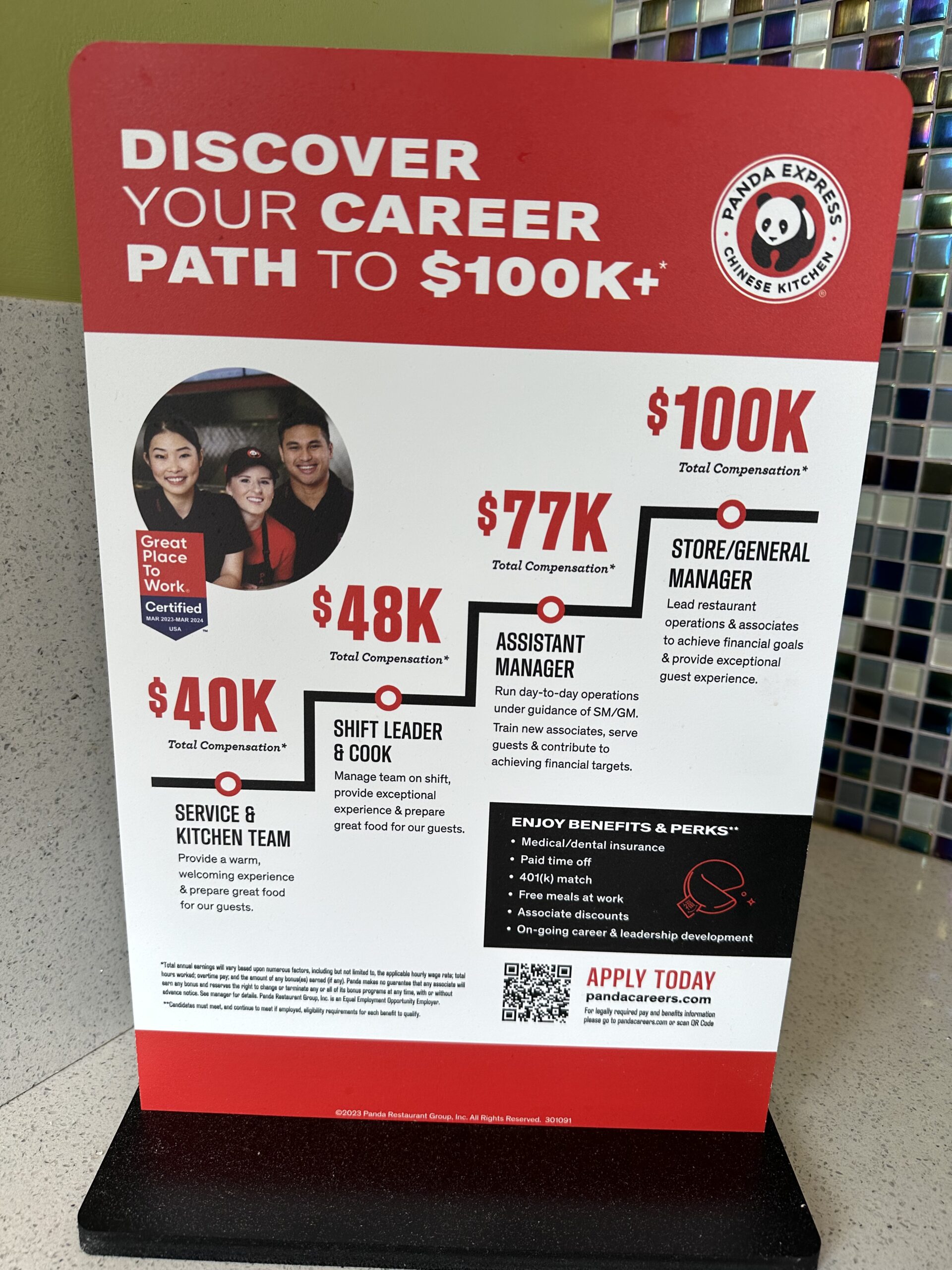
Since CRM is already doing so much on the job training, I think the industry should approach these institutions and ask: “What can I do to help you teach and graduate more students?” (So, we don’t have to do it all). The response will vary depending on the institution, but I know if I worked at these colleges, I’d say: “The number one thing you can do is for your companies to hire our graduates and pay them a livable wage.” Showing students that CRM is a real career is all I really want from CRM companies because many students can’t see how they can feed themselves doing archaeology. It would be nice for the American Cultural Resources Association (ACRA) or the Register of Professional Archaeologists (RPA) to give professors and our programs money, but what we really need right now is a demonstration that CRM actually wants to hire our graduates. That archaeology is a real career and that you really can get paid to do archaeology. Why should I change my curriculum for my best graduates to end up on several “on call” lists? I’d be better off sending them to work at Panda Express.
If the companies can’t hire my students right after graduation, internships with CRM companies while they’re matriculating would be a good consolation prize. Endowments for tenure track professors of CRM would also be appreciated. Seed grants for departments to start a CRM training program are also an excellent idea. Sponsored projects funding for a big data or AI-driven archaeology program is another awesome way to get the ball rolling. But, in order to train more students to do CRM archaeology, I need to be able to convince them that they’ll be able to get a job as a CRM archaeologist. A good way to do that is to hire them as interns before they graduate.
If the CRM industry is serious about training cohorts of CRM archaeologists, I suggest the industry partner with willing colleges and universities. The industry can start with the ones listed above. I also think CRM could successfully build cooperative agreements with mid-sized state universities because I feel like those programs are feeling the most pain from the enrollment gap and the current federal defunding of higher education but have the staff and instructors to teach a CRM-focused series of classes.
Mid-sized state universities may not have CRM programs, but they have the capacity to teach CRM and the need to build them. However, I’d be cautious about starting these partnerships with small schools. Right now, small state and private universities are reeling from thousands of cuts and are seeing enrollment declines as well as tuition increases. Small schools may be desperate enough to start teaching CRM, but they might not have the capacity teach the kind of classes CRM needs since they typically have fewer archaeology faculty which means fewer instructors available to teach CRM classes.
There is also an enrollment cliff in the United States that I’ve already written about that means fewer college-aged folks, but it also means more intense competition amongst universities for those sweet, sweet tuition dollars. Larger schools and flagship state universities are expanding, increasing enrollments and building more amenities, which means they are sucking up the students and tuition that could have gone to smaller state schools and small liberal arts colleges. As a result, smaller schools are shutting down all over the country or are getting bought out as satellite campuses for bigger universities. Who wants to invest in a college that might fail?
Right now, mid-tier state universities are also suffering from all of these forces, but they could make a turnaround if they retooled their curriculum towards workforce training and saw buy-in from the CRM industry. Mid-ranked schools have the faculty and facilities to create Applied Anthropology or CRM grad programs, which would bring in grad student revenue and demonstrate they are providing value to the institution. Pair this with Section 110 agency contracts and CRM industry internships or immediate hire programs and you could have a hit. Most importantly, the dire financial and enrollment situation at these schools just might be enough to convince the old, ossified professors there that change is necessary before it’s too late.
But there is one type of institution I think CRM can ignore—Large flagship and Ivy League universities. Big flagship state unis aren’t going to listen. Neither are the Ivies because these institutions believe they are above workforce training and the CRM industry isn’t big enough to stir up the financial incentive to get the attention of administrators. If you don’t have more than $200 million to wag around, my university isn’t going to give you its attention. Also, most of the professors at these schools (and I am one of them) are so full of themselves that they can’t see the benefit of retooling curriculum to produce useful graduates. Theorizing about theories is what professors at these institutions are paid for. Their entire careers have been built around boutique archaeology so shifting towards serving society would ruin their “brand” (and probably explode their minds).
The biggest and most capable universities are not going to help CRM, so I’d advise the industry to forget about reaching out to these institutions until they have proof of concept at other schools. Professors at schools like mine can’t read the writing on the wall of American archaeology. Those of us at flagship R1s are going to be left behind by American archaeology because we don’t have the ability to change course because we feel like we’re leaders in the field when the only thing we’re leading is our own irrelevance. Tenure track professors at Ivy League and top R1 schools are the only human beings you’re ever going to meet that have completely realized their full human potential. That’s it. This is all we’re ever going to be. We’re cooked. There’s nowhere else for us to go. Don’t hitch your horse to our post.
The time is now
I’ve never seen a better time for CRM companies to build training partnerships with universities. The Enrollment Cliff means this is the largest number of college students we can expect for at least the next two generations. All companies are going to have to start competing for this dwindling resource, but CRM companies are going to have it hard because, as SAA President Christopher Dorr has said, CRM doesn’t have a jobs problem. It has a careers problem.
I don’t have all the answers, but I know doing what we’ve already done for the past 60+ years is not a way of preparing students for successful careers. It’s a chicken$hit way of professors not listening to the world around them. It’s likely that most universities will just keep on doing what they’ve done forever until their institution rolls them together into some conglomerate of random majors that don’t bring in tech investment dollars. Conversely, CRM companies seem like they’re realizing they’re going to have a problem but aren’t ready to start putting their money where their mouths are. There is the beginnings of a rumbling about CRM teaching the next generation themselves, bypassing universities, but we aren’t to a place where they’ll build CRM archaeology programs in higher education or build an industry-funded training program that can replace academia. Our goal should be to prepare students for viable careers in a world where AI is going to be as ubiquitous as the internet. If I’m lucky, we might get there in my lifetime. Definitely hope it happens in less than 60 years.
Works Cited
Altschul, Jeffrey H. and Keith W. Kintigh
2025 American Archaeology at a Crossroads. The SAA Archaeological Record, 25(5):10–11. https://onlinedigeditions.com/publication/?i=857731&p=0&view=issueViewer
Altschul, Jeffrey H. and Terry H. Klein
2022 Forecast for the US CRM Industry and Job Market, 2022—2031. Advances in Archaeological Practice, pgs. 1–16. https://www.cambridge.org/core/journals/advances-in-archaeological-practice/article/forecast-for-the-us-crm-industry-and-job-market-20222031/34BFC0A7C4885030D33D26ABC28C4C9A
Siler, Kyle
2024 Gerontocracy, labor market bottlenecks, and generational crises in modern science. Science and Public Policy, 2024(51):179–191 DOI: https://doi.org/10.1093/scipol/scad064
 Having trouble finding work in cultural resource management archaeology? Still blindly mailing out resumes and waiting for a response? Has your archaeology career plateaued and you don’t know what to do about it? Download a copy of the new book “Becoming an Archaeologist: Crafting a Career in Cultural Resource Management” Click here to learn more.
Check out Succinct Research’s contribution to Blogging Archaeology. Full of amazing information about how blogging is revolutionizing archaeology publishing. For a limited time you can GRAB A COPY FOR FREE!!!! Click Here

“Resume-Writing for Archaeologists” is now available on Amazon.com. Click Here and get detailed instructions on how you can land a job in CRM archaeology today!

Small Archaeology Project Management is now on the Kindle Store. Over 300 copies were sold in the first month! Click Here and see what the buzz is all about.
Join the Succinct Research email list and receive additional information on the CRM and heritage conservation field.
Get killer information about the CRM archaeology industry and historic preservation.